Multi-agent game dev: planner, builder, playtester, reviewer
From the OpenDrama Create Wiki
One long chat with one AI model can build a small game, until it can't: the context fills with old attempts, the model forgets rules it agreed to, and it grades its own work too kindly. Multi-agent game development splits the job between separate agent sessions with fixed roles. A planner turns the spec into task cards, builders implement one card each, a playtester runs the build and reports with screenshots, and a reviewer checks the diff against the card.
They share no chat, only files: the plan, the cards, hand-off notes and evidence. Set up right, the agents check each other instead of undoing each other, and the token bill stays predictable.
When to use it
It's worth the overhead when at least one of these is true:
- The game has three or more separable parts. Player controller, levels, UI, enemy AI, audio, assets. Separable means the boundary fits in one sentence: "the HUD reads
state.speedand never writes it". - One session has started to drift. Fixed bugs come back, units change, names revert. That's context overload, and a fresh session with a short brief fixes it better than another reminder.
- You need an honest check. The agent that wrote a feature tends to call it done. An agent that sees only the checklist and the running build has no reason to be generous.
- Assets and code can move in parallel. One agent builds props in Blender while another codes gameplay against placeholder boxes of the same size.
Skip it for a one-day prototype, a single-file game or a project without a stable spec: five agents working from a vague idea produce five incompatible ideas. Write the spec first (spec-first AI game building), get one playable loop working with one agent, and add a second only when you can name the file it will hand over.
The cost: every agent re-reads the spec and the code it touches, so tokens grow faster than the number of agents. In return you get parallel work and a review you didn't have to do yourself. Start with two agents, a builder and a playtester.
Kit: a git repo, an agent tool that runs shell commands (Claude Code, Codex, Cursor or similar), a way to screenshot the running game (Playwright for web games, a render command for Blender), and an hour for the first plan.
Members read on
The rest of this page is for members
- 10 more steps
- 1 copy-ready prompts
- 3 reference tables
- 6 more sections
Create a free account, top up once — from $0.99 — and the whole wiki is yours.
- Every breakdown, Skill and Prompt
- New pages every day
- Prompts copy in one tap
See also
Breakdowns that use this

More in Workflow
View all →Meng To's playbook: Claude Code for the baseline, Codex for the parts, Stripe at the end
In a 45-minute tutorial Meng To shows how he builds web apps with Claude Code and Codex: meeting notes to baseline, one thread per feature, then an AI API and Stripe. The method and the three prompts.
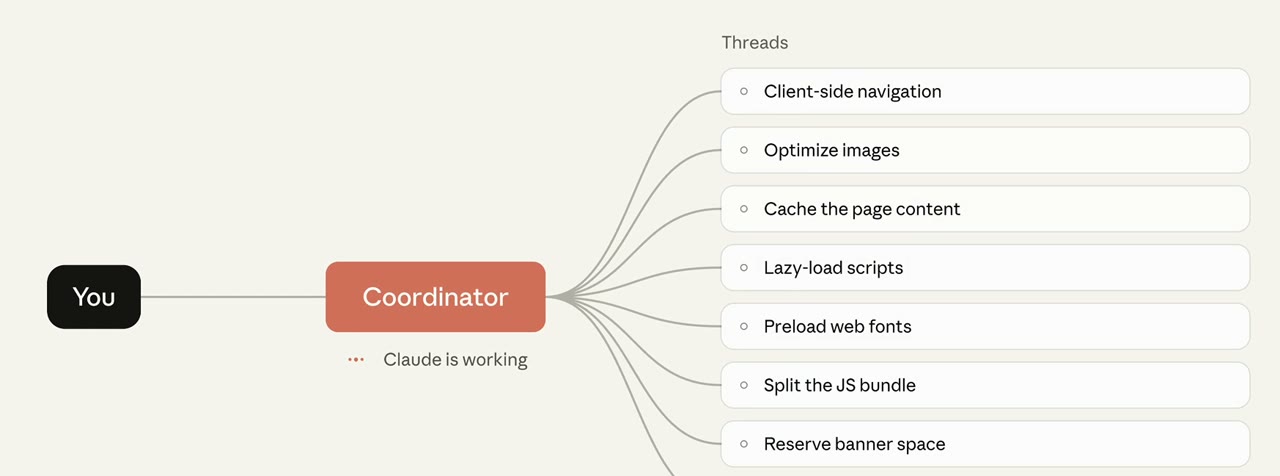
Claude Code Projects for game dev: one coordinator, parallel threads, one PR each
In Anthropic's walkthrough, a coordinator splits one speed goal into 8 threads, each on its own branch with its own PR. Here's how to apply it to a web game, plus the quota and access limits.