Spec first: getting a playable game out of an AI model
From the OpenDrama Create Wiki
Ask a coding model for "a racing game" and you get something that runs but doesn't play: a box slides across an endless plane, there's no lap and no finish, and the camera clips through the first wall. The model isn't the problem. A one-line prompt leaves a dozen design decisions open, and the model fills each one with the most generic answer it knows.
Spec first fixes that in two moves. You write a one-page spec that pins down the core loop, controls, win and lose, camera, feel numbers, what's out of scope and how you'll test it. Then you build in small milestones, each one played, checked and committed before the next. This page covers what goes into the spec, how big a step should be and when to restart. The fill-in prompt version is the game design brief.
- 01Pitchone sentence + the first 60 s
- 02Specloop, controls, rules, camera, limits, tests
- 03Plan6–10 playable milestones
- 04Buildone milestone per request
- 05Verifyplay 2 min, run the checks, commit
When to use it
Use it whenever you want something people can actually play rather than a tech demo: a browser racing toy, a short 3D exploration story, a puzzle with a dozen levels, a jam entry. It's worth it as soon as a project needs more than one session, because the spec file is the only memory that survives a new chat.
You need it if this sounds familiar:
- The model keeps "improving" things you never asked for: menus, particles, a shop.
- Every fix breaks something that worked an hour ago.
- After two hours there are 3,000 lines of code and still no way to win.
- The game runs at different speeds on different screens, or not at all on a phone.
- You can't say whether it's finished, because "finished" was never written down.
Skip it for one-shot experiments: a shader toy, a 20-minute "can it do this?" test. A plain prompt is faster there. For jam toys, the ten-line mini brief on the game design brief page is the middle path.
The cost is 30 to 45 minutes of writing before any code. In return the model stops guessing, every step has a pass/fail check, and a broken step costs one git revert instead of an afternoon.
Members read on
The rest of this page is for members
- 13 more steps
- 1 copy-ready prompts
- 2 reference tables
- 6 more sections
Create a free account, top up once — from $0.99 — and the whole wiki is yours.
- Every breakdown, Skill and Prompt
- New pages every day
- Prompts copy in one tap
See also
Breakdowns that use this
More in AI games
View all →An anti-gravity racer in two days: three cups, online lobbies, cars made by players' AI
Stefan rebuilt his childhood favourite, F-Zero X, as the browser racer ZERO-G with AI in two days, and it was played 1,000+ times. Here's the asset pipeline and the design that makes people finish a race.
Day 20 of an AI-built strategy game: a stone golem that wakes up, and a tavern
Stefan is building the strategy game he has wanted for 15 years with AI. Day 20 adds a golem that hides as a pile of rocks and a tavern where you hire fighters. We follow the golem from reference images into Unity.
Desk photos to a playable kart racer: Gemini 4 Argon, Blender MCP and Three.js
genevieve__h from Google AI Studio turned photos of her home-office desk into a kart racing game with Gemini 4 Argon, Blender MCP and Three.js. We rebuild the method frame by frame.
One person, 16 days, Opus 5.5: The Little Prince as an explorable 3D game
Sac built a planet-by-planet 3D Little Prince with Opus 5.5, Tripo and Blender, playable in the browser. Here's the asset pipeline and how the scenes are organised.
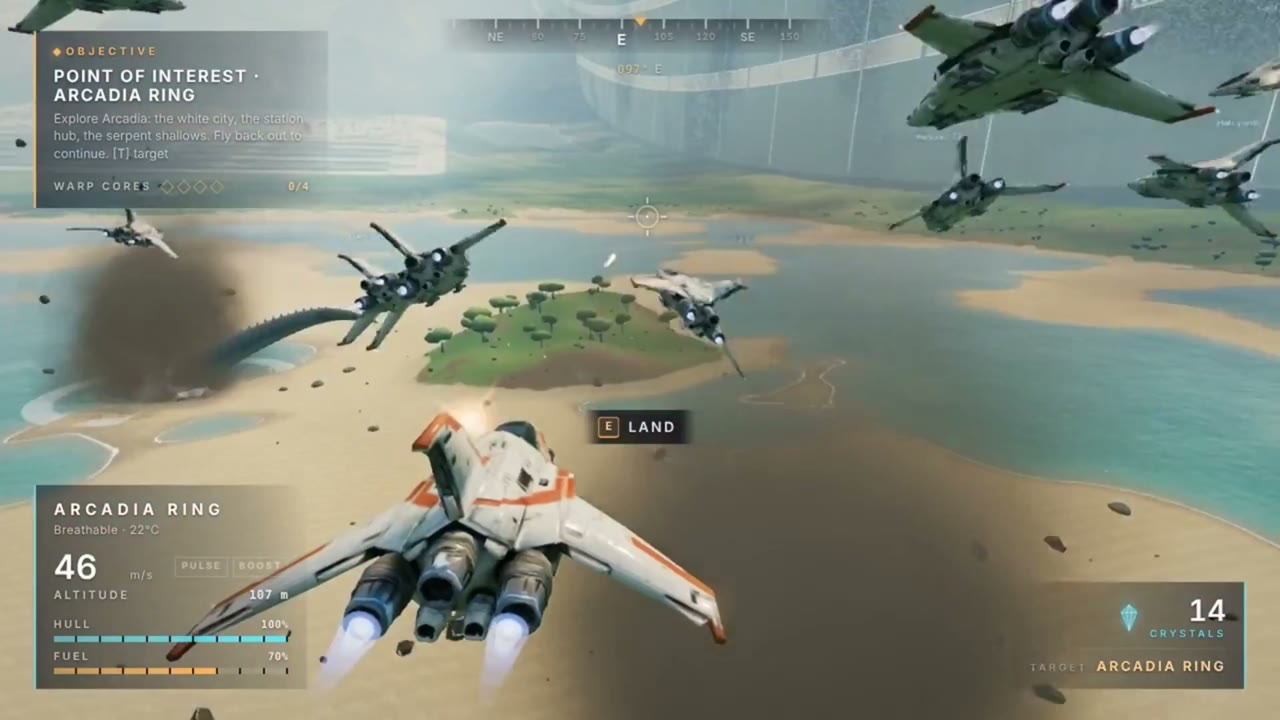
After going viral: how Sky Reach added a Ring world and multiplayer rooms
Tesana says a user's space game, made with a few prompts, went from 2.5M to over 3M views in just over a week. Here's how it added a Ring world and multiplayer without breaking what already worked.
Lyrio: a 3D exploration game built on movement, made with Opus 5.5 and Three.js
A fox-eared scout runs, launches off Wind Springs and glides between floating islands. We break down how the movement set becomes the whole game, and how the collectibles feed it.